Guide to Clare MI Downtown Commercial Properties
April 16, 2026
April 16, 2026
If you are looking at a downtown Clare building for your business, it is easy to focus on charm first and details later. Old brick facades, upper floors, storefront windows, and central visibility can make a property feel full of opportunity. But in Clare, the smartest small-business decisions usually come from understanding zoning, parking, layout, and building condition before you commit. Let’s dive in.
Downtown Clare is more than one short block of storefronts. The city’s Downtown Development Authority district covers a broader area with defined boundaries set by ordinance, and the city also provides online planning maps for zoning and future land use. If you are comparing properties, it helps to confirm whether a building falls within the DDA area and to review the city’s posted planning resources early in your search. You can start with the city’s DDA boundary and development plan information.
The building stock also tells an important story. Public listings point to a downtown market made up of older, compact, street-oriented properties, including office, flex, and historic retail spaces. That means many buildings may offer character and adaptive-reuse potential, but they may also require a closer look at systems, layout, and renovation costs.
In a market like Clare, you are not usually choosing from large blocks of modern office space. Instead, you may be looking at buildings with features like tall ceilings, original details, mixed floor plans, basements, or rear parking areas. Those features can add value, but only if they fit your business model.
For example, a storefront with strong street presence may work well for retail or client-facing services. A flex building on a different downtown edge may offer easier parking or more usable back-of-house space. The key is to compare how each property functions day to day, not just how it looks online.
One of the biggest factors in downtown Clare is zoning. According to the downtown ordinance excerpt, new downtown buildings are generally expected to begin at a minimum of two stories or 24 feet, may go up to four stories and 61 feet, and in buildings with two or more stories, first-floor heights should be at least 12 feet. The same framework also states that all stories must contain habitable commercial, office, or residential space, which makes upper-story use an important part of downtown planning. You can review the relevant downtown zoning language here.
For a small-business owner, that creates real opportunity. If you are considering a mixed-use purchase, upper-story residential may be worth exploring. Still, it is important to remember that zoning language is only one part of the picture. You also need to verify parcel-specific rules, building-code feasibility, and the real cost of conversion before assuming an upper floor can be reused the way you want.
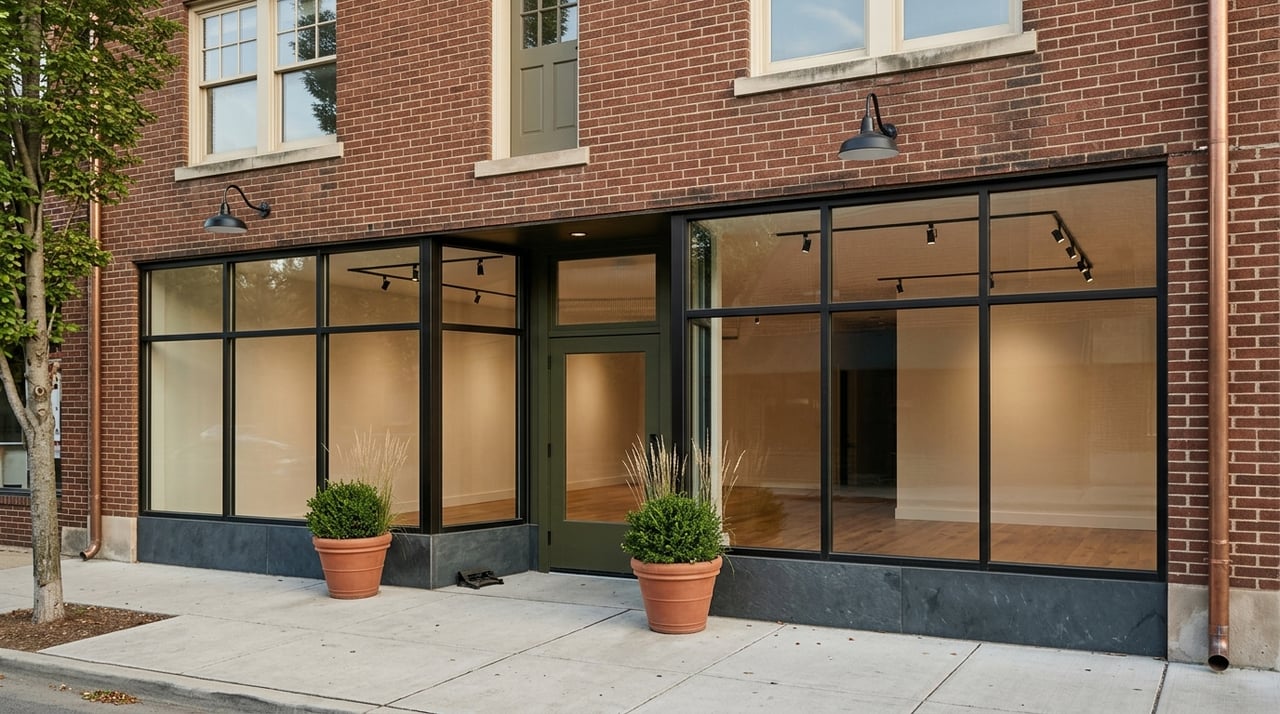
Clare’s code also supports a traditional downtown form. Buildings are expected to sit on build-to lines with no minimum setbacks along McEwan Street or other main streets, which reinforces the close-to-the-sidewalk look many buyers want in a downtown business district. In practical terms, that means frontage, windows, facade presence, and signage visibility may carry just as much weight as square footage.
If your business depends on walk-in traffic, easy recognition, or a polished storefront image, that downtown form can be a major benefit. If your operation depends more on storage, private access, or vehicle flow, a different building layout may be more efficient even if the address is still near downtown.
Upper floors are often one of the most overlooked parts of older downtown buildings. In Clare, the ordinance framework suggests upper-story residential or other habitable use is part of the intended downtown pattern, not just an exception. That can make some buildings more appealing to investors or owner-users who want multiple income streams.
Still, older upper floors can bring added complexity. Stair access, code compliance, permits, utilities, and renovation budgets can all affect whether that extra square footage is truly usable. Before you count upper-story space as income potential, make sure your due diligence is thorough.
In downtown Clare, parking is not something to figure out after closing. The city states that overnight on-street parking restrictions apply from November 15 through April 1, and a city packet from June 2024 notes 2-hour parking on the west side of Beech Street from 6th Street north to 7th Street. Those rules matter if your business relies on staff parking, customer convenience, or all-day access. You can review the city’s public works and parking information.
There is also evidence that downtown parking can be managed creatively. A DDA packet from 2020 notes approval to lease on-street parking spaces to the downtown business community, which suggests shared or managed arrangements may play a role in how some businesses operate. You can see that context in the DDA meeting packet.
When you compare buildings, ask direct questions like:
Downtown Clare does not appear to have a deep pool of lease and sale comps. LoopNet’s Clare lease search reports only a small number of active commercial lease listings, with an active office listing at 1438 N McEwan asking $9 per square foot per year for 1,000 square feet, and the platform indicates an average office rent near Clare of about $9 per square foot per year. In a thin market, that means headline pricing can be helpful, but it should not be your only guide. The local commercial lease search snapshot shows how limited the market can be.
Sale pricing also varies widely. A current listing at 546 W 5th is asking $1.2 million, or about $157.13 per square foot, while an older public retail listing at 420 N McEwan was marketed at about $48.16 per square foot. That kind of spread shows why condition, parking, ceiling height, location, and reuse potential often matter more than a simple price-per-foot comparison. You can see one example in the 546 W 5th listing details.
Older downtown buildings can be exciting because they offer character you cannot easily recreate. But charm does not always equal efficiency. A beautiful storefront may still need expensive updates, awkward circulation changes, or code-related improvements before it works for your business.
As you evaluate options, focus on practical questions such as:
Those answers will often tell you more than a sales flyer.
Because many downtown Clare buildings are older, due diligence is especially important. The city states that Clare County Community Development handles building, electrical, plumbing, and mechanical permits and inspections for the city. The assessor’s office can provide lot size and a plot map, but it cannot survey or locate stakes, which means buyers should not confuse assessor information with a legal survey. You can begin with the city’s building code and permit information.
A smart due diligence checklist may include:
In a smaller market, this kind of preparation can help you avoid expensive surprises.
Clare’s downtown commercial market is specialized. Inventory appears limited, zoning language is specific, and parking can involve a mix of on-site, on-street, and shared arrangements. That means a building that looks similar on paper may perform very differently in real life depending on its layout, frontage, access, and future potential.
Working with a local real estate advisor who understands commercial and mixed-use property can help you compare options more clearly. If you are weighing a downtown storefront, office building, flex property, or possible mixed-use investment in Clare, the right guidance can help you connect the dots between the ordinance, the building, and your business goals.
If you are thinking about buying, selling, or evaluating a downtown commercial property in Clare, the Daniella Bell Group is here to help you make a confident, well-informed move.
Stay up to date on the latest real estate trends.