Buying Osceola County MI Horse Property Wisely
May 14, 2026
May 14, 2026
If you picture a horse property as just a house with acreage, you could miss details that matter most after closing. In Osceola County, the right parcel for horses or a hobby farm depends on more than price and square footage. You need to think about zoning, soil, drainage, barn setup, and how the land will actually function through all four seasons. This guide will help you focus on the practical checks that can protect your plans and help you buy with confidence. Let’s dive in.
If you are looking near Tustin or elsewhere in Osceola County, parcel-level rules matter. The county master plan notes that Burdell Township surrounds the Village of Tustin and is a zoned township, which means you should confirm the exact local jurisdiction before assuming horse use is allowed.
That matters because one rural-looking property may support your goals while another may not. In this part of the county, land use rules, setbacks, frontage, and permit requirements can change based on the township and zoning district.
Before you fall in love with the barn or the pasture view, verify what the parcel allows today. In Burdell Township, farms and general farming operations are permitted by right in the AR district, while riding stables, including horse boarding, are allowed by special use permit.
The same ordinance lists a 5-acre minimum lot area in the AR district, along with 300 feet of street frontage and yard requirements of 75 feet in front and 50 feet on the side and rear. If you want horses for personal use, a hobby farm setup, or possible boarding later, these details can shape whether the property fits your plans.
Parcels in other districts may be more limited. For example, Burdell Township’s R district has a 1-acre minimum lot area and 100 feet of frontage, so you should not assume every rural parcel is suited for the same horse-related use.
If you plan to add a barn, build a shelter, move earth, or make major site changes, local approval may come into play. In Burdell Township, site plan approval is required before construction activity, earth moving, or site alteration.
That is an important checkpoint if you are buying raw land or a property that needs improvements. A parcel that looks easy to develop may require more steps than you expect.
Smaller outbuildings are not automatically a free pass. In Burdell Township, accessory buildings of 120 square feet or less may be permit-exempt, but setbacks still apply, and larger accessory buildings must meet district yard rules.
Fence rules also deserve a close look. The ordinance allows fences, walls, and screens up to 6 feet in all yards, while separately stating that fences used for controlling animals are not subject to that general height limit.
Acreage can look generous on paper but still feel tight once you account for turnout, manure management, wet areas, buildings, and driveway access. Michigan State University Extension says a well-managed pasture should provide about 2 to 4 acres per 1,000-pound horse, and an adult horse needs about 2 acres for quality grazing plus about 2 acres per horse for manure spreading.
That does not mean every buyer needs the same setup. It does mean you should match the land to the number of animals you expect to keep and how you plan to manage the property over time.
In Northern Michigan, mud season is real. MSU recommends a sacrifice or exercise lot when pasture is limited so horses can stay off wet ground.
For planning purposes, MSU suggests about 1,000 square feet per horse for a sacrifice or exercise area. It also recommends placing that area away from wetlands, surface waters, and wells.
One of the smartest things you can do when buying a horse or hobby farm property in Osceola County is study drainage. MSU Extension notes that clay-based soil drains more slowly than sandy soil, and low-lying or high-traffic areas are more likely to turn muddy.
The county master plan adds useful local context. In the county’s northwest quadrant, including Burdell, LeRoy, Rose Lake, and Sherman townships, soils are described as mostly sandy with mixed suitability. Some areas are better suited for woods, pasture, wildlife habitat, or recreation than for intensive crop production.
That can be good news for some horse-property buyers, especially if your goal is pasture and recreational land use rather than row crops. Still, no county-level map can replace parcel-level review.
For parcel-specific due diligence, the NRCS Web Soil Survey is the official tool for mapping soils and soil ratings for a defined area. It can help you check limitations before deciding how you want to use the land.
If a property includes lowland areas, stream-valley ground, or visibly wet sections, take a closer look. The county master plan notes that some lowland stream-valley soils can be poorly drained muck and sandy soils that are often used for forest or permanent pasture.
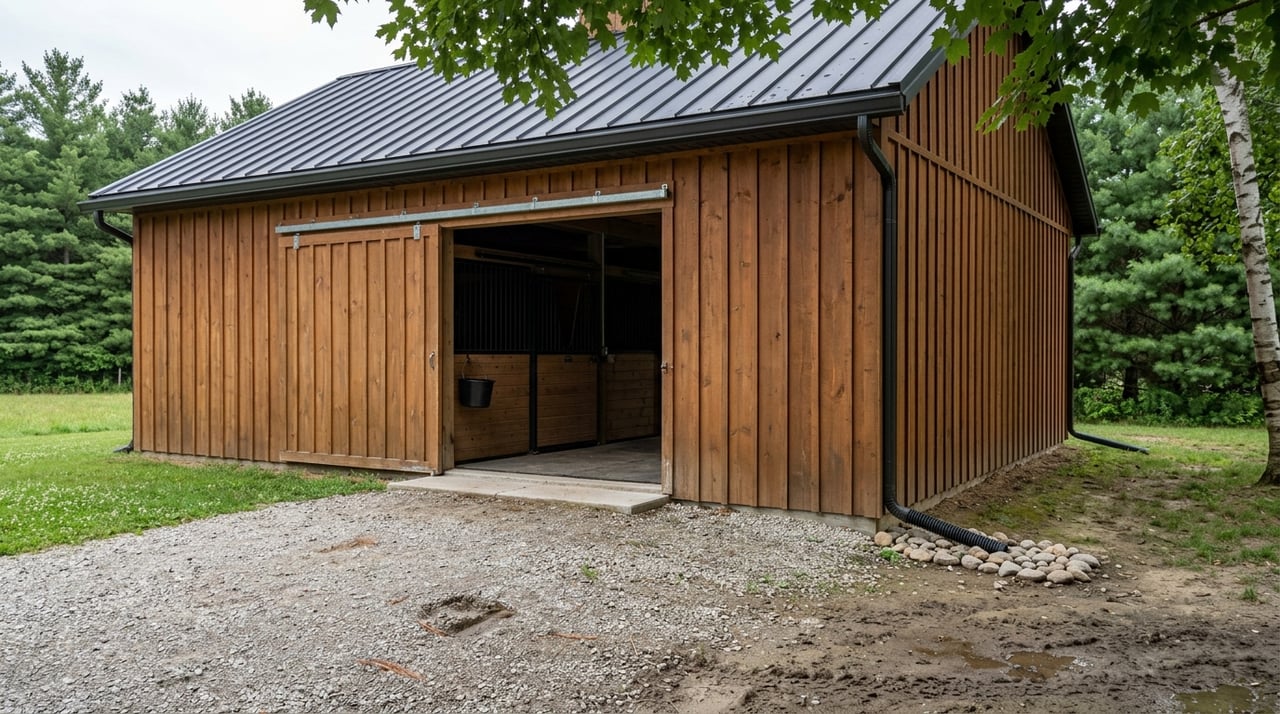
A cute barn is not always a practical barn. MSU Extension treats a 10-by-10-foot stall as the minimum acceptable size, with 12-by-12 or 14-by-14 preferred for larger horses.
Aisle width matters too. MSU says barn aisles generally should be 8 to 14 feet wide, and box stalls are preferred over tie stalls.
When you tour properties, look beyond appearance and think about daily movement. A workable setup may include:
Flooring also matters in long-term maintenance and horse comfort. MSU lists common flooring options such as sand-and-clay mixes, crushed limestone, or well-bedded asphalt.
Horse fencing should be judged by safety and fit, not just cost or curb appeal. MSU recommends fencing that matches the type of horse use, including three-board wood or diamond-mesh with a sight board for mares, foals, and young horses, and four-board fencing for stallions.
MSU does not recommend barbed wire or high-tensile fencing as primary horse fencing because of the risk of serious injury. If you are buying an existing property, fencing condition should be part of your inspection mindset from day one.
Many buyers focus on pasture and overlook where manure will go. On a horse or hobby farm, manure handling is one of the biggest long-term ownership issues.
MSU Extension says small farms often use dry stacking, ideally on an impervious floor with three walls. It also notes that clay soils are a better base for manure piles than sandy soils because sand allows nutrients to leach through.
This is where zoning, soils, and layout all come together. A beautiful parcel may still create daily headaches if there is no logical place for manure storage, turnout rotation, and equipment access.
Michigan’s Right to Farm program says farms that follow the GAAMPs receive a level of nuisance protection, and the state uses those standards to evaluate complaints and livestock siting issues. If you expect a more intensive or expanded livestock setup, that longer-term use plan should fit the parcel before you close.
When you are comparing horse and hobby farm properties in Osceola County, keep your due diligence focused on function as much as appearance.
Buying rural property is often about more than the house itself. You are also evaluating land use, physical layout, and whether the property can support the lifestyle you want without expensive surprises.
That is especially true in places like Osceola County, where township rules, mixed soil conditions, and seasonal drainage can change the picture quickly. When you understand those details upfront, you are in a much better position to choose acreage that truly supports your version of La Bella Vita.
If you are thinking about buying a horse property, hobby farm, or rural acreage near Tustin or elsewhere in Osceola County, the right guidance can help you ask better questions before you commit. The team at Daniella Bell Group is here to help you evaluate land, compare properties, and move forward with confidence.
Stay up to date on the latest real estate trends.